 Order Helpline:
 Search
 Email
Email Cart (0)


Internal Door Trends for 2026: What’s Popular (and What’s Actually Worth Considering)
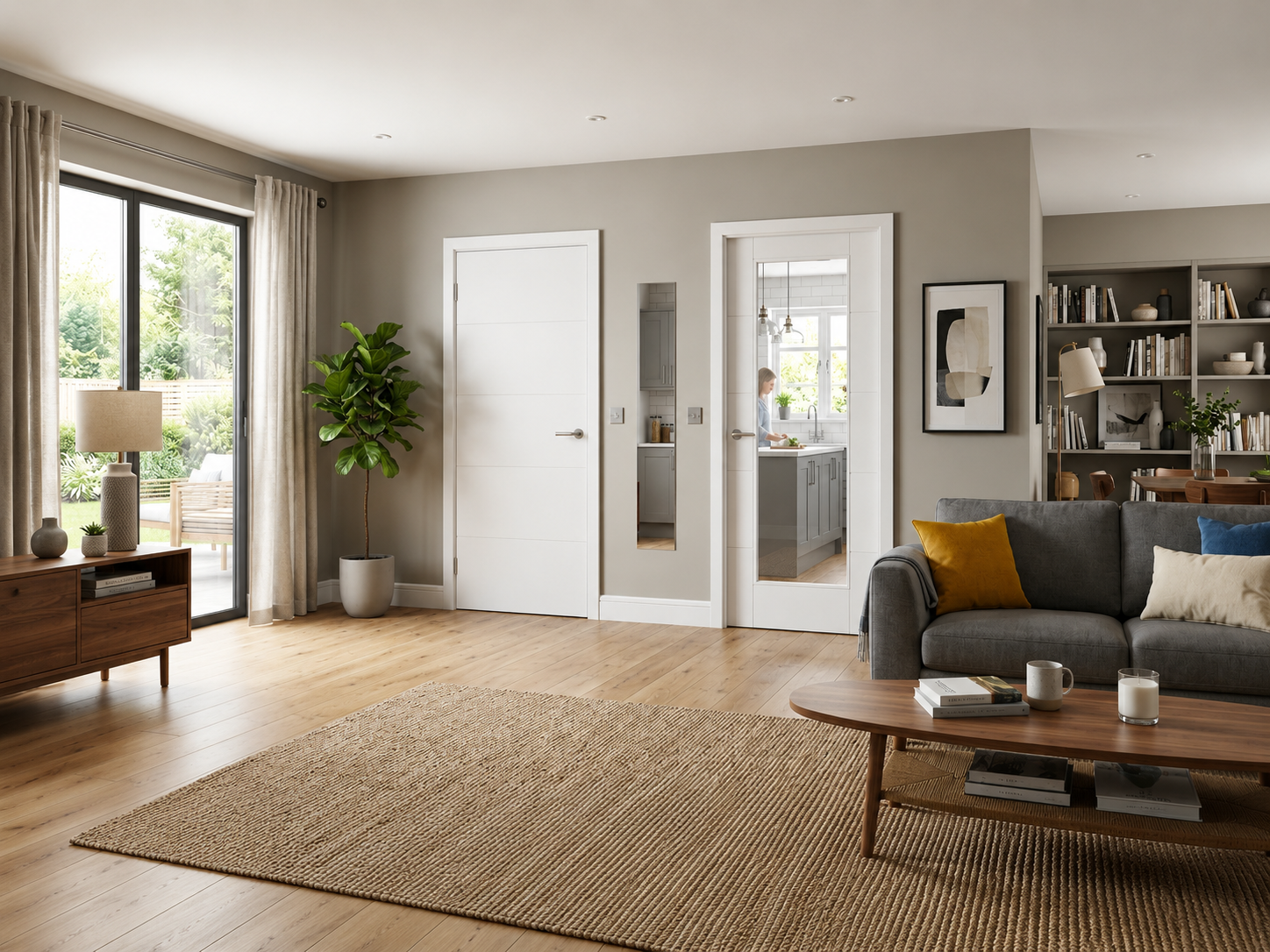
Internal doors might not be the first thing you think about when updating your home, but once you start paying attention, it’s hard to ignore the impact they have.
They frame every room, influence how light moves and play a surprisingly big role in whether a space feels cohesive or slightly disjointed.
So far in 2026, the trend hasn’t been about dramatic, short-lived styles. Instead, we’re seeing a move towards refined, thoughtful choices, doors that feel current but still have longevity. It’s less about chasing fashion and more about making confident, well-balanced decisions that will still feel right in years to come.
If you’re considering an update as we move through the second half of the year, here’s what’s proving popular and why it’s working so well in real homes.
Natural Oak Continues to Lead The Way
Oak remains one of the most reliable choices and for good reason.
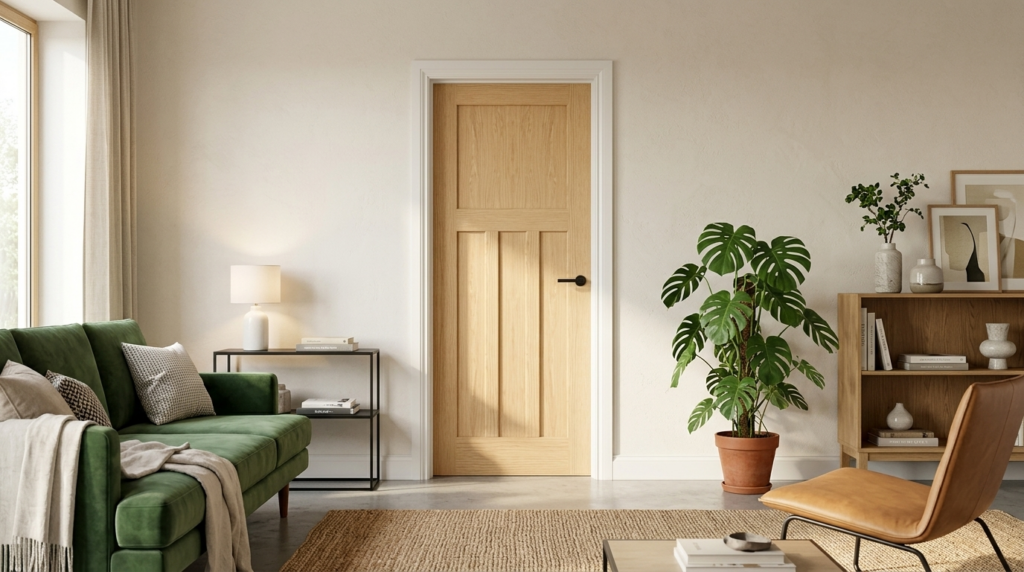
It brings warmth, texture and a certain character that’s difficult to replicate with other finishes. We’ve noticed the preference is shifting slightly towards cleaner, more contemporary oak door styles, with:
- – Lighter, more neutral oak tones
- – Subtler grain patterns
- – Prefinished options for ease and consistency
This makes oak particularly well suited to modern homes, where it can soften sharper lines and add a sense of balance. In 2026, natural washed timber veneers are becoming a staple in luxury interior design, providing a real authentic modern feel while allowing the natural grain of the wood to take centre stage. Oak doors exemplify the trend towards natural textures and natural materials, which are key components for creating intentional, modern interiors.
It also works beautifully across an entire property. Whether you’re using solid doors in bedrooms or glazed oak doors in shared spaces, oak provides a consistent thread that ties everything together.
Are oak internal doors still in style?
Yes, absolutely! Oak internal doors remain one of the most popular and enduring choices.
The natural warmth, versatility and hardiness of oak means they work across both traditional and modern interiors easily, making them a safe long-term investment. As we’ve noted, in 2026, lighter oak tones and cleaner designs are proving especially popular, as they complement brighter, more open spaces. The popularity of different oak door designs may ebb and flow over time, but the enduring beauty of oak itself will never go out of style.
Shaker-Style Doors: Simple, But Never Plain
Shaker internal doors have become something of a modern classic.
Their appeal lies in their balance. Simple enough to suit a wide range of interiors, but with enough structure to feel considered and intentional.
This year, we’re seeing:
- – Slimmer panel detailing
- – More use of painted finishes
- – Consistent use across entire homes
We’ve found that reeded panels are being used in 2026 as a subtle design feature within larger panel configurations, adding texture, depth and some visual interest to Shaker doors without overwhelming their aesthetic.
They’re particularly effective in properties where you want a subtle upgrade that doesn’t feel too contemporary or too traditional.
Shaker doors also adapt well over time. They can be repainted, paired with different hardware, and styled to suit evolving interiors, which makes them a practical choice as well as a stylish one.
Why are shaker internal doors so popular?
Shaker doors remain popular because of their simple, balanced design, which works well in a wide range of spaces. They offer a clean, timeless look that doesn’t date quickly, making them ideal for homeowners who want something versatile but fresh.
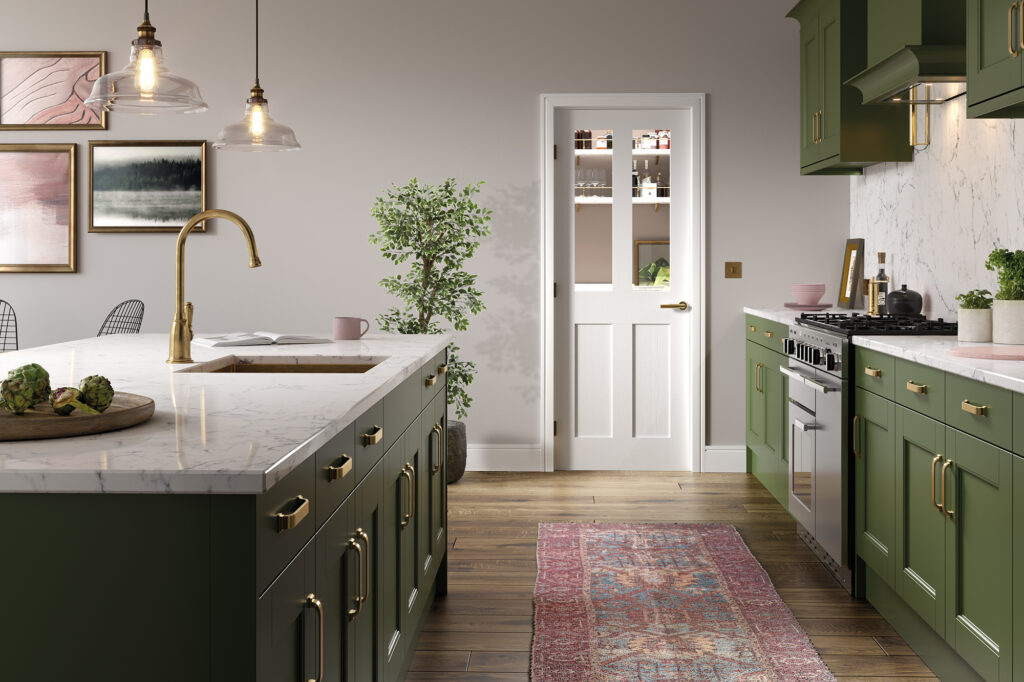
Their adaptability also means they can easily be repainted or restyled over time, helping them stay relevant as interior trends change. They’d look just as good in natural oak as they would painted black or green.
Black Internal Doors: Bold, But Controlled
Black internal doors have moved beyond being a trend and are now firmly part of the mainstream… when used thoughtfully.
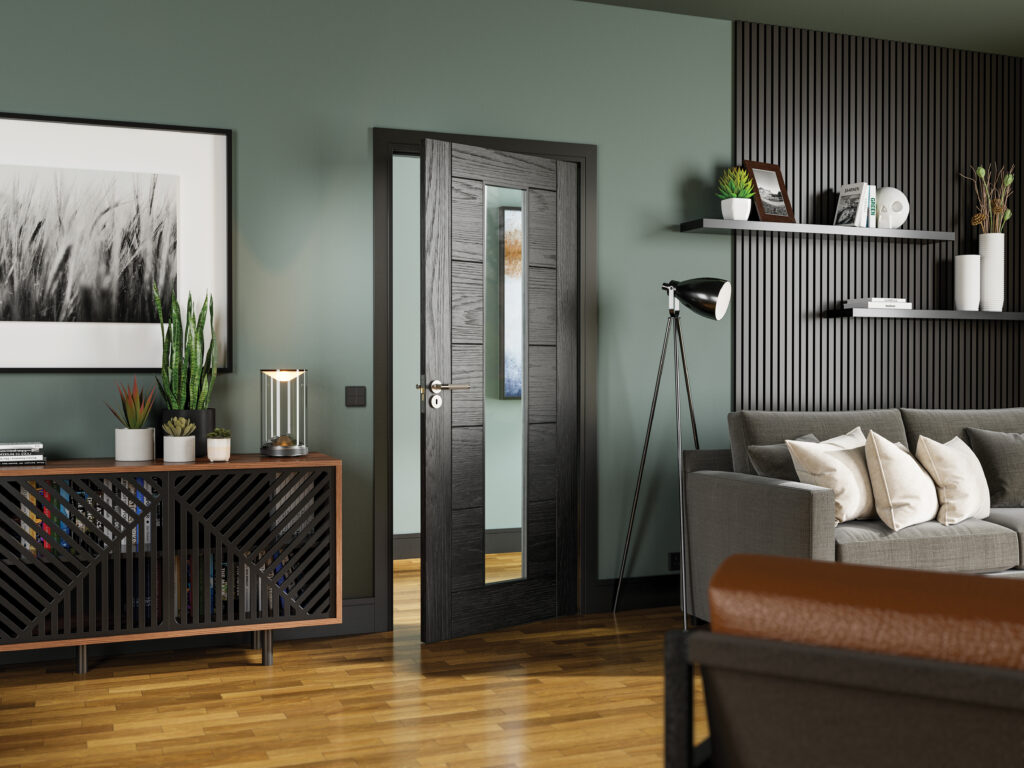
In 2026, deep navy, charcoal and black colours are being used to create high contrast in well-lit areas, adding drama to interior spaces. Charcoal black continues to be a favoured colour for internal doors, it offers a sleek, modern look but with softer undertones compared to deep matte black.
Black doors bring contrast and definition, particularly in lighter spaces where they can act as a much needed visual anchor. What we’re finding in 2026 though is that they’re being used more strategically, rather than throughout an entire property.
Popular applications include:
- Feature doors in living spaces
- Glazed black-framed industrial style designs for kitchens or offices
- Pairing with neutral walls and natural flooring
Matte black is a top choice for its bold contrast and smooth finish, making them especially effective for creating contrast in your home. The key is restraint. Too many dark doors can make a space feel heavy, but used selectively, they can really add depth and a more contemporary edge.
Are black internal doors a good idea?
Black internal doors can be a great choice if used in the right setting. The key is balance, pairing them with softer tones and using them selectively rather than throughout the entire home.
Check out our blog post on styling black interior doors if you’d like more inspo for your home.
Glazed Doors for Better Light Flow
One of the biggest shifts in recent years, and continuing into 2026, is the focus on light and openness.
Glazed internal doors are becoming increasingly popular as homeowners look for ways to improve natural light without structural changes.
We’re seeing demand for:
- Full-height glazed panels for maximum light
- Partially glazed designs for a balance of privacy and openness
- Textured or reeded glass for a softer, more decorative look
They’re particularly effective in:
- Hallways that lack natural light
- Kitchen and dining transitions
- Home offices
Used alongside matching solid doors, they’re great for introducing variation without losing consistency.
Do glazed internal doors make a difference?
Yes, definitely! Glazed internal doors can significantly improve how light moves through a home, making spaces feel brighter and more open. They are especially useful in darker areas like hallways or between living spaces.
By creating better flow of natural light, they help limit the need for artificial light, which will ultimately help you cut energy bills. The benefits of glazed internal doors are multiple!
Painted Finishes: Softer, More Relaxed Tones
While crisp white will always have its place, 2026 is seeing a move towards softer, more lived-in colours. Warm neutrals, such as cream and soft ivory, are replacing cooler tones in door colour trends, which can really help bolster the overall warmth of a space. Earthy neutrals and greige( a blend of gray and beige) are also gaining popularity as top-searched door colours for their subtle, soft-toned palettes, especially in open-concept spaces.
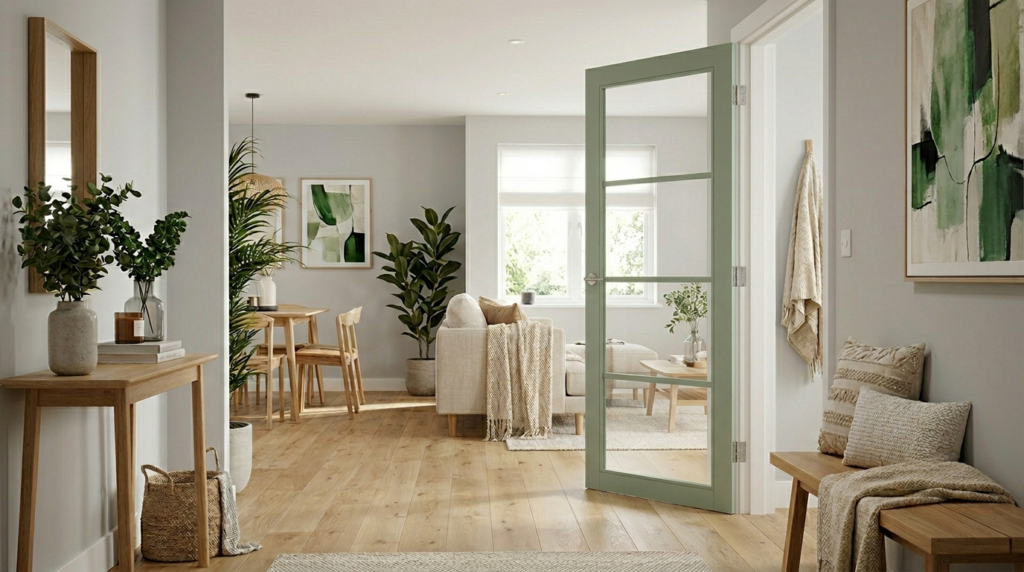
Soft sage green has also emerged as a popular choice for interior doors in 2026, reflecting a desire for calm, nature-inspired hues that complement both modern and classic decor styles.
Homeowners are going for:
- Warm off-whites
- Gentle greys
- Muted earthy tones
These finishes create a calmer, more inviting feel compared to stark white, while still keeping things neutral enough to work across multiple rooms.
Colour drenching remains popular too. Allowing you to really lean into the idea that more is more without being too over the top.
Painted doors also offer flexibility. If your interior style evolves and you fancy a change, they can be refreshed relatively easily, which is something that appeals to a lot of homeowners looking for longevity without being locked into one look.
Are painted internal doors a good option?
We think so! Painted internal doors are a practical and versatile choice. They allow you to match or complement your interior colour scheme and can be refreshed over time if your style changes.
Slimmer, More Refined Profiles
Another subtle but important trend is the move towards lighter, more refined door proportions. We’ve found that there’s been high demand for simple designs to fit in more minimalist interiors with clean lines and subtle detailing, especially in open plan layouts and contemporary homes.
Sliding doors and other modern door styles such as pocket doors are also increasingly popular as they can really improve how an open-plan living space works day to day.
Compared to older styles with heavy mouldings and bulky frames, 2026 doors choices are leaning towards:
- Slimmer stiles and rails
- Cleaner lines
- Less decorative detailing and more glazing
Heritage style and steel-look internal doors remain an inspiration for a lot of people too, with their large glass panels and simple yet sturdy framing, they’re a brilliant focal point but really easy to style around. Despite being one of the older door styles, they give a more contemporary, polished feel while still keeping them approachable and easy to live with.
It’s a small change on paper, but across a whole home, it creates a noticeably lighter, more modern look.
What makes an internal door look modern?
Modern internal doors typically feature clean lines, simple panel designs and minimal detailing. Slimmer proportions and neutral finishes also contribute to a more contemporary look, helping doors feel lighter and more in keeping with current, less fussy interior styles.
Consistency Across Your Home
Perhaps the biggest trend isn’t a style at all, it’s a shift in how people approach choosing doors.
More homeowners than ever are now thinking about their doors as a complete scheme, rather than individual purchases. Cohesive detailing across door sets, including handles, hinges and escutcheons, is becoming increasingly important for creating a truly designer look.
This could mean:
- Choosing one range and using it throughout your entire home
- Mixing glazed and solid versions of the same design
- Sticking to consistent finishes and hardware for a more premium look
Satin brass is emerging as the ‘new neutral’ finish for internal doors in 2026, offering a warm, modern look that pairs beautifully with lighter woods. Warm metals such as satin brass and antique brass for hardware and accessories are becoming more and more popular as they really create a sense of quiet luxury for a more sophisticated, premium look.
The result is a home that feels more cohesive, more considered and ultimately more “finished”.
It’s a simple approach, but one that makes a noticeable difference.
Should all internal doors in a house match?
Good question! Internal doors don’t necessarily need to be identical, but they should feel consistent in style and finish so they harmonise. Using a matching range with both glazed and solid options is a popular approach, as it allows for variation while still keeping things “joined up” and intentional.
Choosing a Style That Lasts
While trends can be helpful for inspiration, the most successful choices are those that balance style with longevity.
In 2026, we’re finding the strongest trends are those that complement a wide range of interiors, work across multiple rooms and offer flexibility over time.
It’s less about making a bold statement in one space and more about creating a home that feels balanced and comfortable as a whole.
What internal door style is best for long-term value?
Timeless styles such as shaker, panelled oak such as the Mexicano and slimline glazed designs tend to offer the best long-term value. They’re versatile, widely appealing and less likely to date quickly.
Which internal doors will you choose in 2026?
Internal door trends in 2026 are all about refinement rather than reinvention.
Warmer materials, better use of light and a more considered approach to consistency are shaping the way homeowners are updating their spaces. The focus is on choices that feel good now but will still feel right in years to come.
And when you get it right, it’s not just about how your doors look, it’s about how your whole home comes together.